

A Story of Mangroves, Community, and Resilience From Sri Lanka’s Shores
- Guest Writer

- Jul 13
- 3 min read
Written by Samuel Appiah Ofori (Guest Writer)
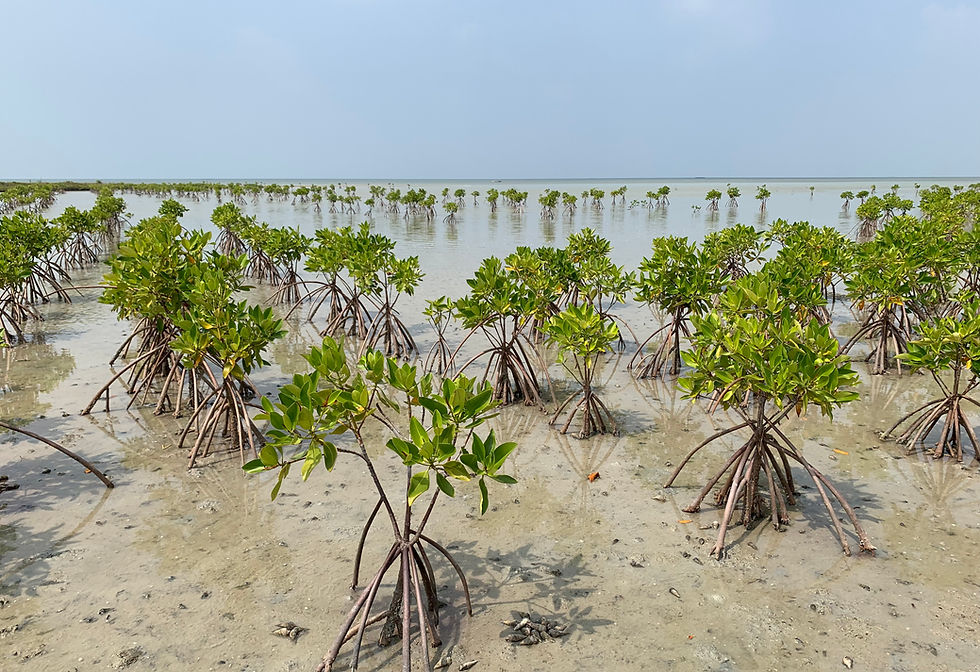
Sri Lanka is one of the world’s most extraordinary biodiversity hotspots. It’s also one of the most wounded.
Since the 1980s, the mangroves that once protected fisheries, stabilised shorelines, and sheltered communities have largely disappeared, mainly due to large-scale shrimp farming.
Aquaculture is responsible for the loss of as much as 40 % of global mangrove cover. Converting coastlines into shrimp ponds disrupts delicate ecosystems, changes natural water circulation, and introduces pollution into surrounding marine environments.
The earthquake that changed Sri Lanka’s coast
The country sustained another serious setback on December 26, 2004, when a catastrophic 9.1 magnitude undersea earthquake struck off the coast of Indonesia. The earthquake generated huge tsunami waves that spread across the Indian Ocean and hit several countries, including Sri Lanka.
More than 35,000 lives were lost in Sri Lanka and more than 500,000 were impacted, with many losing their homes and livelihoods.
The eastern, southern, and southwestern coasts were especially affected.
In 2005, a preliminary post-tsunami survey of Sri Lanka’s mangrove sites revealed that human activity increased the damage inflicted on the coastal zone by the tsunami[1].
Moreover, it was found that the areas with more mature, intact, and less degraded mangroves were less susceptible to the impacts of the tsunami.
This underscored the need for mangrove conservation and restoration efforts — and early warning systems for ecological degradation.

One Tree Planted and Sri Lanka’s mangrove recovery efforts
Since 2021, One Tree Planted has supported the restoration of mangroves in four lagoon ecosystems across Sri Lanka that are rallying back from the tsunami [1,2].
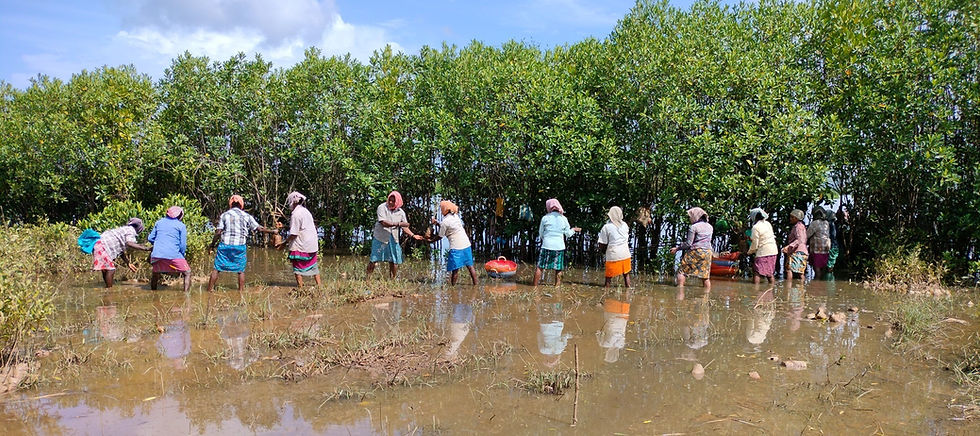
These projects engage local fisherfolk — who fish coastal lagoons early every morning — in a slightly different activity: collecting mangrove seeds as they float in with the tides. Those seeds become seedlings, and those seedlings become vital coastal forests, reassuring the locals that these areas can — and will — recover.
How mangroves support people and the planet
Mangroves are among the most productive ecosystems on Earth — they cover approximately 15% of the world's coastlines, where they sequester up to ten times more carbon per hectare than terrestrial forests, shelter 1,500 species, and protect coastal communities from storm surges and erosion.
These ecosystems form critical habitat for fish, crustaceans, and other marine mammals. They provide nesting and breeding grounds for many bird species, demersal fish species, shrimp, and other wildlife. They also protect eggs, create shelter for brooding, and foster essential food sources for adult, larvae, juvenile, and fingerling fish.

In 2024, mangroves were planted on government lands maintained by the coastal conservation department. The mangrove seedlings, most of which were grown in our partner’s nursery, include the species such as Rhizophora mucronata, Avicennia marina, and Ceriops tagal.
Many cottage industries in Sri Lanka, including mat mending and fishing material construction, depend on healthy mangroves. These industries are central to the livelihoods of coastal fisherwomen, helping them support their families and secure a higher standard of living.
In addition to supporting local livelihoods and forming critical biodiversity habitat, mangroves provide a powerful buffer against erosion, typhoons, and tidal waves — and can help prevent much of the destruction associated with these natural disasters.
All of these functions highlight the central role they play in maintaining healthy, vibrant ecosystems — and protecting the incredible diversity of life that Sri Lanka is known for.
What happens to mangroves does not stay at the shoreline — it ripples outward into climate, biodiversity, food systems, and human lives. Restoring them is an act of survival.
References
[1] Dahdouh-Guebas, F., Jayatissa, L. P., Di Nitto, D., Bosire, J. O., Lo Seen, D., & Koedam, N. (2005). How effective were mangroves as a defence against the recent tsunami? Current Biology, 15(12), R443–R447.https://doi.org/10.1016/j.cub.2005.06.008
[2] Weeden, M. (2024, October 22). Restoring mangrove lagoons in Sri Lanka. One Tree Planted. https://onetreeplanted.org/blogs/stories/sri-lanka-mangroves
About the Author

Dr. Samuel Appiah Ofori is a mangrove conservation and restoration specialist with expertise in climate policy, nature-based solutions, and ecosystem management and restoration across Africa. He holds a PhD from the Université Libre de Bruxelles, where his research examined how African countries can leverage mangrove ecosystems to strengthen their Nationally Determined Contributions (NDCs) and climate action. He currently serves as Africa Projects Manager at One Tree Planted, with extensive experience managing large-scale reforestation, mangrove restoration, and agroforestry projects, working closely with governments, local communities, NGOs, and private-sector partners to deliver measurable environmental and social impact.


Comments