

On the Edge of Disappearance, Bruguiera hainesii Still Stands
- Guest Writer

- Jul 6
- 4 min read
Written by Shifa Helena (Guest Writer)
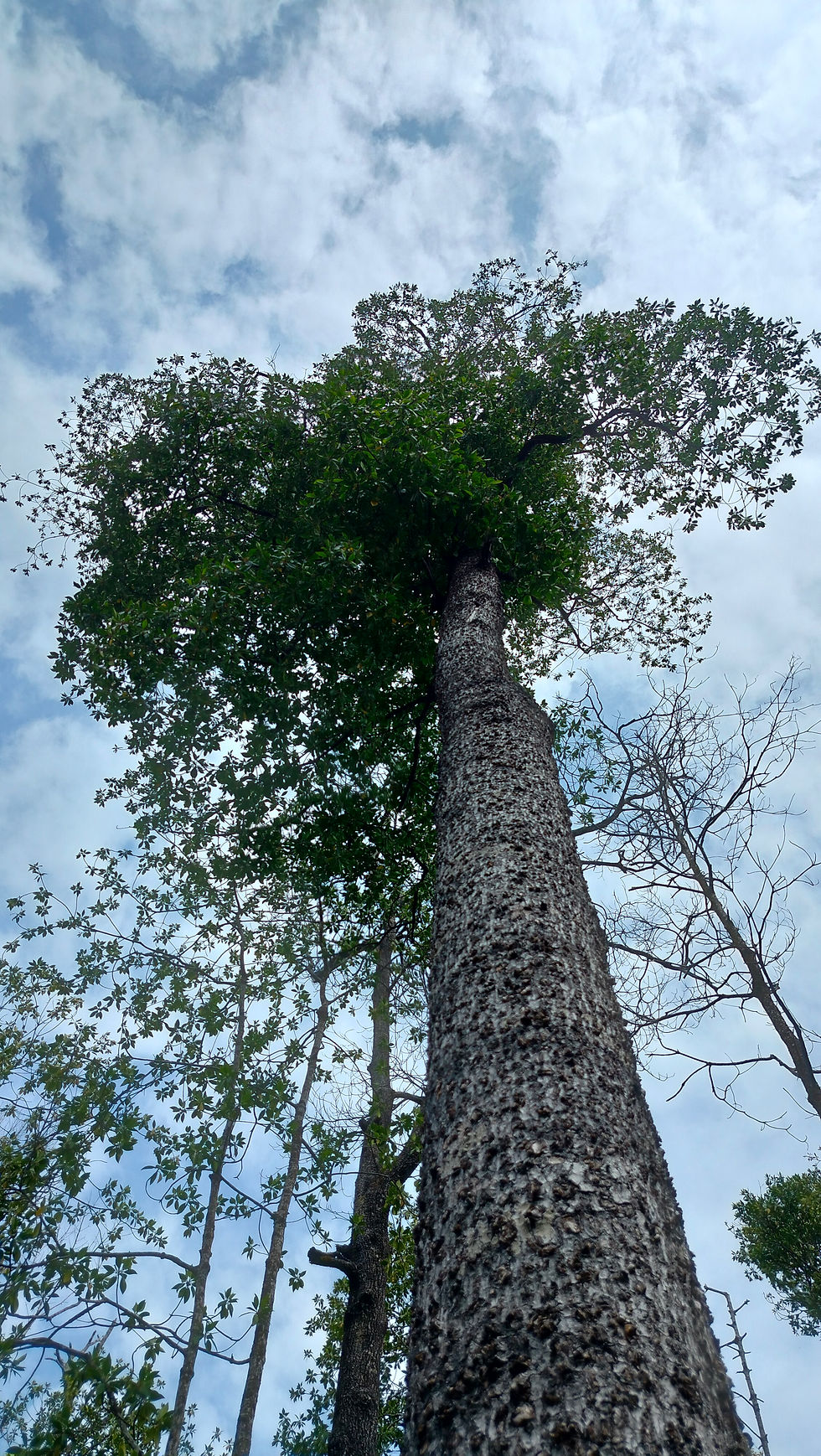
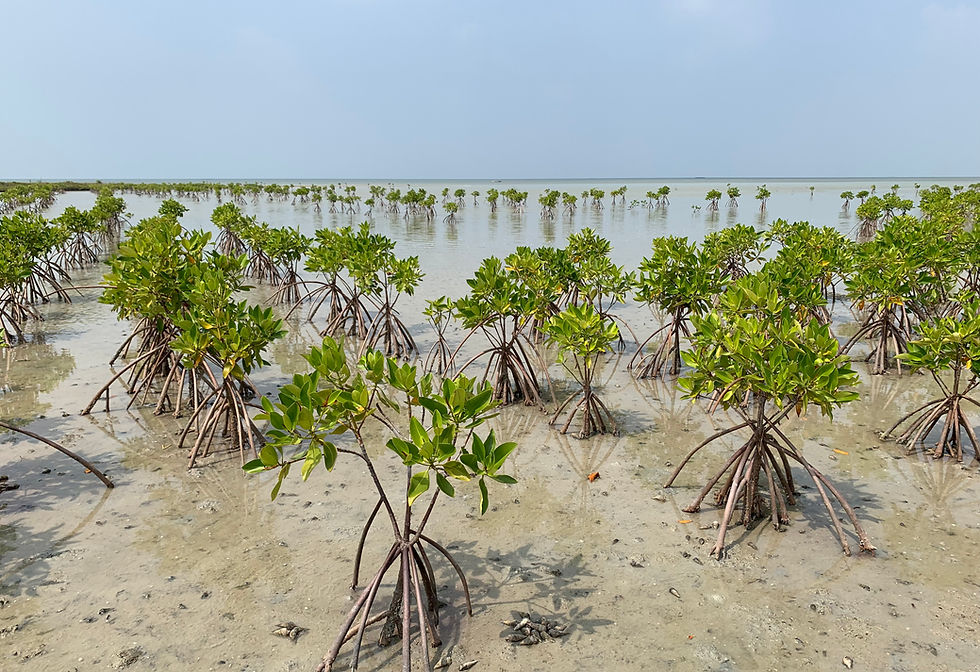
Not in a grand protected reserve, nor in a perfectly preserved forest – it survives quietly on a remote coast of West Kalimantan, Indonesia. There, among dark mud, tangled mangrove roots, and seawater that slowly eats away the shoreline, it holds on.
There, we found three remaining trees of Bruguiera hainesii.
Bruguiera hainesii: a rare beauty on the edge of disappearance
This is a critically endangered mangrove species with an estimated ~200 mature individuals remaining due to severe habitat decline as a result of coastal development[1]. It is recognised as one of the rarest mangrove taxa globally!
This species is highly restricted in distribution, occurring only in a few fragmented populations across Southeast Asia. Its taxonomic status remains debated, but molecular evidence suggests it may represent a long-standing natural hybrid between Bruguiera gymnorrhiza and Bruguiera cylindrica [2,3].

What fascinated me most was that local communities had known this tree long before researchers arrived with Latin names, conservation statuses, and scientific reports.
Bruguiera hainesii: The “bad timber tree”
Some elders in the village shared stories which were passed down from their grandfathers. They said Bruguiera hainesii was known as a “bad timber tree.”
“If you cut it, the chainsaw breaks easily,” one villager laughed.
The wood was considered troublesome, extremely hard, with irregular fibres that quickly dulled or damaged chainsaw blades. Even when burned for charcoal, people believed it produced poor-quality fuel, leaving too much ash compared to other mangrove species.
So, unlike many mangroves that were heavily harvested, this tree was often left standing.
Listening to those stories, I quietly thought to myself: perhaps this was how the tree survived despite us. While we cleared, built, and pushed forward, it held its ground in the mud, unprotected.
While other mangrove species were cut down because they were economically valuable, Bruguiera hainesii endured simply because people found it inconvenient to use. It felt as though its natural properties, it had created its own defence, not by becoming useful, but by becoming difficult to exploit.
Among the trees, silence speaks the loudest
But time brought other threats.
The surrounding mangrove forest gradually changed. Some parts were cleared, other parts were logged, and, eventually, these areas slowly disappeared due to coastal erosion. Today, only three mature trees remain in their natural habitat.
And each of them is struggling to exist.
One tree stands directly in front of severe coastal abrasion, where waves continuously strip away the sediment around its roots. Another is weakening from termite attacks spreading from fallen nearby trees. The third is barely surviving permanent inundation, trapped in water conditions that are slowly altering its habitat.
Perhaps the saddest part of all is the silence around them. No seedlings. No young trees. No next generation growing beneath the canopy.
This absence of regeneration is linked to the severe ecological condition of the site which prevented seedling survival. Bruguiera hainesii is known to exhibit very low propagule production and germination success, which further limits natural recruitment [4].
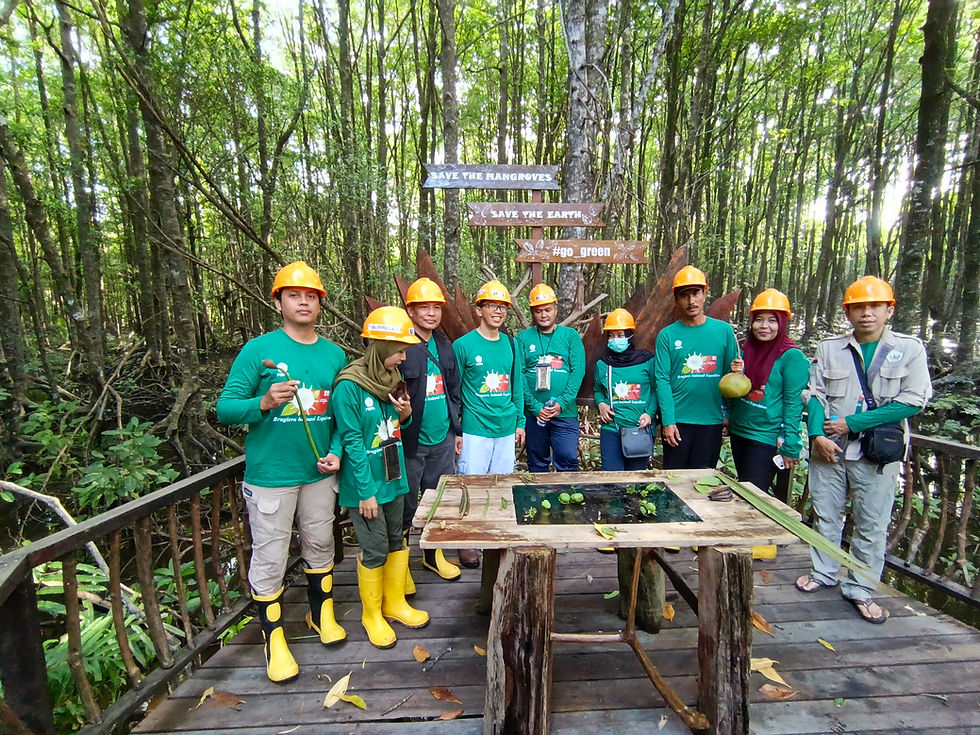
Bruguiera hainesii trees: Will they endure the test of time?
Standing in front of those three trees, I felt something that was difficult to explain. They did not look extraordinary at first glance. Just old mangrove trees, weathered by saltwater and time.
Yet, knowing that these were the first confirmed records of Bruguiera hainesii documented in Indonesia made that moment feel deeply emotional.
Three trees.
This isn’t a forest. Not even a healthy population. Just three individuals, clinging on at the edge of the sea.
At that moment, conservation no longer felt like statistics, categories, or scientific reports. It felt personal. Fragile. Human.
Today, local communities have started protecting these remaining trees. People no longer cut mangroves around the site. There is now a sense of caution — even respect — because this species is considered rare and protected.
Yet many still do not fully understand why mangroves matter to their own lives.
But they know that this species is close to extinction.
Not everyone realises that mangrove roots are what keep their coastline from washing away. They also don’t know that the dark mud beneath the forest floor stores carbon for centuries or that fish, crabs, and shrimp supporting coastal livelihoods begin their lives within these ecosystems.
Perhaps conservation always begins this way: with people protecting something before fully understanding its value.
And maybe, among the waves, mud, and aging roots that still cling to the shore, Bruguiera hainesii teaches us a simple lesson.
Not everything considered useless is truly without value.
References
[1] Duke, N. et al. (2010). Bruguiera hainesii. The IUCN Red List of Threatened Species 2010:e.T178834A7621565.http://dx.doi.org/10.2305/IUCN.UK.2010-2.RLTS.T178834A7621565.en
[2] Ono, J., Yong, J. W., Takayama, K., Saleh, M. N. B., Wee, A. K., Asakawa, T., Yllano, O. B., Salmo, S. G., III, Suleiman, M., & Tung, N. X. (2016). Bruguiera hainesii, a critically endangered mangrove species, is a hybrid between B. cylindrica and B. gymnorhiza (Rhizophoraceae). Conservation Genetics, 17(5), 1137–1144.10.1007/s10592-016-0849-y
[3] Shearman J.R., Naktang C., Sonthirod C, Kongkachana W., U-thoomporn S., Jomchai N., Maknual C., Yamprasai S., Promchoo W., Ruang-areerate P. , Pootakham W., Tanghatsornruang S. (2022). Assembly of a hybrid mangrove, Bruguiera hainesii, and its two ancestral contributors, Bruguiera cylindrica and Bruguiera gymnorhiza. Genomics. Volume 114, Issue 3, 110382
[4] Polidoro, B.A., Carpenter, K.E., Collins, L., Duke, N.C., Ellison, A.M., Ellison, J.C., et al. (2010). The Loss of Species: Mangrove Extinction Risk and Geographic Areas of Global Concern. PLoS ONE 5(4): e10095. https://doi.org/10.1371/journal.pone.0010095
About the Author
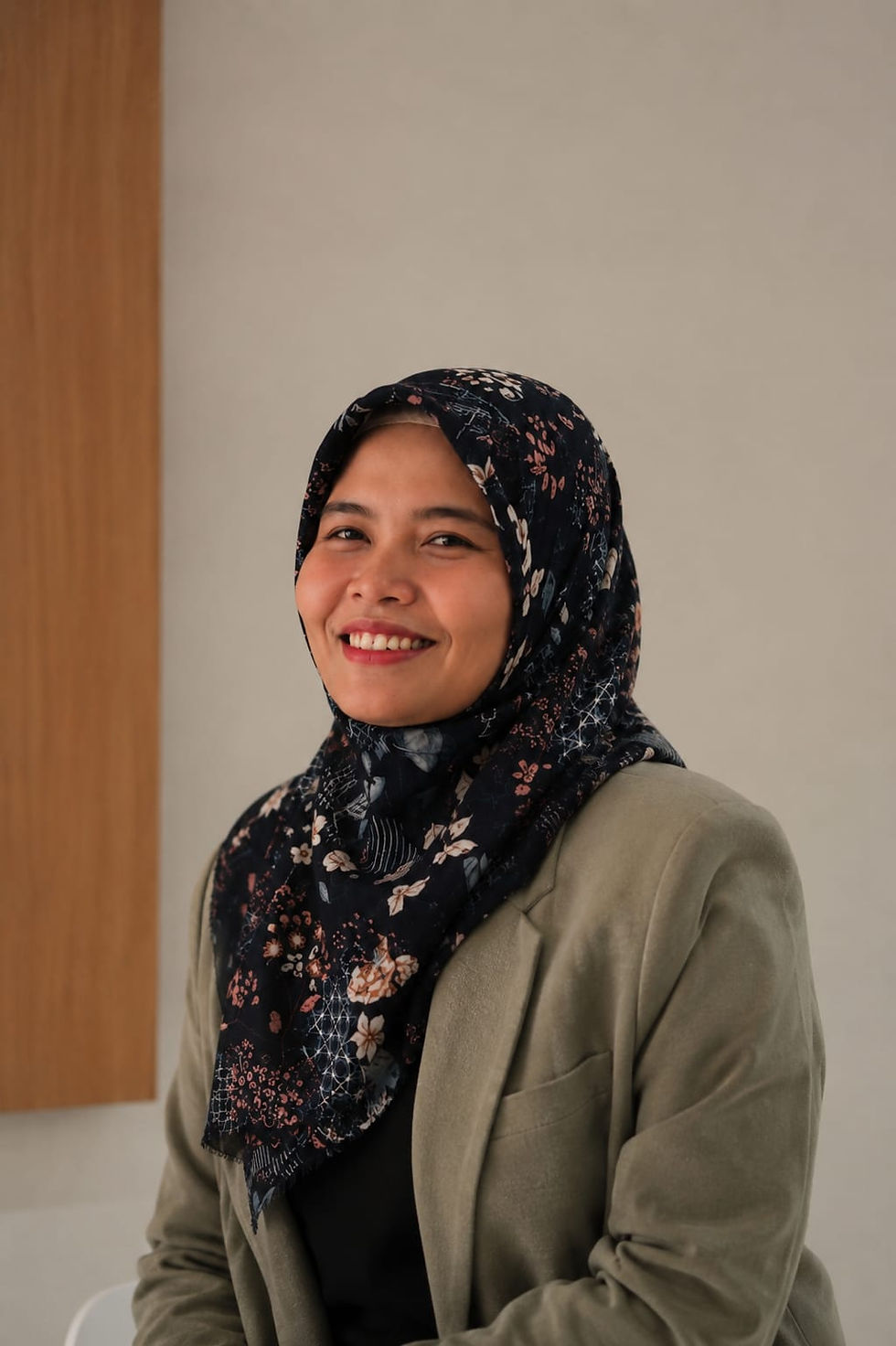
Shifa Helena is a lecturer and marine ecologist at the Department of Marine Science, Faculty of Mathematics and Natural Sciences, Universitas Tanjungpura, Indonesia. Her research focuses on the ecology, conservation, and restoration of tropical coastal ecosystems, particularly mangroves, seagrass meadows, and coral reefs. She is especially interested in blue carbon, nature-based solutions for climate adaptation, coastal resilience, and biodiversity conservation. Through interdisciplinary research and community engagement, she works to advance sustainable management and restoration of coastal and marine ecosystems in Indonesia.

Comments